
 Menu
Menu Back
BackAnimal Assisted Therapy
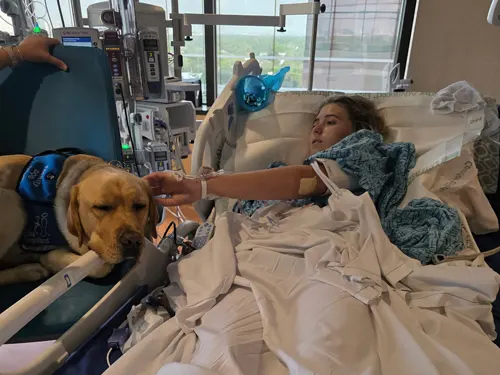 Healing is often thought of in clinical terms: procedures, medications, and measurable outcomes. But anyone who has faced a long hospital stay or a life-altering diagnosis knows that true healing reaches far beyond the physical. It lives in moments of connection, in restored hope, and in the quiet return of a will to keep going. This is where animal-assisted therapy reveals its extraordinary power.
Animal-assisted therapy is built on a simple but profound idea. The presence of a gentle, intuitive animal can help bridge the gap between medical treatment and emotional recovery. In hospitals, rehabilitation centers, and care facilities, therapy animals provide something no machine or medication can replicate. They do not see diagnoses or limitations. They see a person.
For patients facing pain, fear, or isolation, that presence can be transformative. Studies have shown that interacting with therapy animals can lower stress hormones, reduce blood pressure, and ease anxiety. Beyond the science, there is something deeply human at work. A wagging tail or a soft nuzzle can break through despair in a way words often cannot. Patients who feel withdrawn may begin to engage again. Those who are discouraged may find renewed motivation. Even a brief visit can shift the emotional atmosphere of an entire room.
Dogs are the most familiar ambassadors of this work, and for good reason. Their loyalty, sensitivity, and ability to read human emotion make them exceptional companions in therapeutic settings. Yet the world of animal-assisted therapy extends beyond what many people expect.
Miniature horses, in particular, are emerging as remarkable therapy partners. Gentle, intelligent, and highly trainable, they bring a unique presence that can be especially impactful. Their size allows them to safely visit indoor environments, including hospitals, while their calm demeanor makes them well-suited for individuals who may feel overwhelmed or fragile.
What makes miniature horses so powerful in therapy is not just their novelty, but their nature. Horses are deeply perceptive animals. They respond to human emotion with sensitivity and authenticity, often mirroring feelings in a way that helps patients feel seen and understood. A miniature horse offers a different kind of bond, one that feels grounding, steady, and quietly reassuring.
There is also something undeniably uplifting about encountering a miniature horse in an unexpected place. In the midst of clinical routines and sterile surroundings, its presence can spark curiosity, joy, and even laughter. Those moments matter. They remind patients that life still holds wonder, even in the hardest seasons.
Animal-assisted therapy is not a replacement for medical care, but it is a powerful complement to it. It addresses the emotional and psychological dimensions of healing that are too often overlooked. When patients feel comforted, connected, and hopeful, they are better equipped to face the challenges of recovery.
At its heart, this work is about more than animals. It is about restoring the human spirit. It is about meeting people where they are in their most vulnerable moments and offering them a sense of peace and possibility.
Because sometimes, healing does not begin with a treatment plan. Sometimes the tale of healing, begins with a quiet presence, a soft smile, and the simple reminder that you are not alone.